contact us
Contact

Company name: Shandong Peninsula Cable Co., Ltd

Tel.: 0535-8621134

Mobile: 13688691898

Email: [email protected]

Q Q :1653178622

Website: www.bandaotable.cn

Address: Tonghai Road, High tech Development Zone, Longkou, Shandong

Your current location: home page >> News bulletin >> technical knowledge

Application scenarios and classification of new energy cables

Date of issue: 2025-05-22 Author: bandaocable Click:

New energy cable It is a key component used to transmit power and signals in new energy fields such as new energy vehicles, charging piles, photovoltaic/wind power grid connection, etc. It needs to have high voltage resistance, high temperature resistance, anti-interference, long life and other characteristics. The following is a detailed analysis from multiple dimensions:

1、 Application scenarios and classification

1.  New energy vehicle field

  • High voltage cable : It is used to connect high-voltage components such as batteries, motors, and electronic control systems. The voltage level is usually 600V - 1500V (such as 800V high-voltage platform models), and it needs to withstand high voltage and low impedance.

    • Example: The power cable from the battery pack to the motor can transmit more than 200kW.

  • Charging cable : Including vehicle charging line (household slow charging) and charging pile connecting line (DC fast charging). The fast charging cable needs to support high current (such as 400A - 600A), coupled with liquid cooling technology for heat dissipation.

  • Low voltage signal cable : It is used for signal transmission of sensor and control system, and shall be resistant to electromagnetic interference (such as CAN bus cable).

2.  PV/wind power grid connection

  • Collecting cable : The connection between photovoltaic module or wind turbine and combiner box shall be resistant to outdoor environment (ultraviolet ray, high and low temperature), and common models such as PV1 - F PV cable

  • Grid connected cable : Connect the power of the power station to the power grid, the voltage level covers 1kV - 35kV, and it needs to meet the high-voltage transmission standards.

3.  Energy storage system

  • The connection between the energy storage battery pack and the converter (PCS) needs to support high current charging and discharging, and also has fire retardant characteristics.

2、 Core technical requirements

1.  Electrical performance

  • High withstand voltage and low loss : The insulation material shall withstand the rated voltage (such as the insulation withstand voltage of automobile cable ≥ 3000V AC), and the conductor shall be made of high-purity oxygen free copper (purity ≥ 99.95%) to reduce the resistance loss.

  • Anti electromagnetic interference : Multilayer shielding structure (aluminum foil+woven mesh), shielding efficiency ≥ 85dB, to avoid signal interference (such as crosstalk between on-board electronic equipment).

2.  Physical and environmental performance

  • High temperature and weather resistance

    • The working temperature of automotive cables is usually - 40 ℃ - 125 ℃ (up to 150 ℃ near some engine cabins), and the insulation materials are mostly silicone rubber, cross-linked polyethylene (XLPE) or fluororubber.

    • Outdoor photovoltaic cable shall be resistant to ultraviolet aging and pass T ∨ V certification (e.g. weathering test ≥ 1000 hours).

  • Flexibility and bending resistance : The on-board cable shall adapt to the vibration of the vehicle body, the bending radius shall be ≤ 10D (D is the cable diameter), and the insulation shall not break after multiple bending.

3.  Safety performance

  • Flame retardant and fireproof : Comply with UL94 V-0 flame retardant standard, and some scenes need to meet the requirements of low smoke zero halogen (LSZH) (such as subway charging cable), and do not release toxic gas when burning.

  • Waterproof and dustproof : The connector interface shall reach IP67/IP68 protection level to prevent short circuit caused by rain and dust intrusion.

3、 Key materials and structures

1.  conductor

  • Multi strand stranded copper conductor (ASTM B8 type) is used, and the sectional area is designed according to the current demand (e.g. 120mm ² - 240mm ² for automobile fast charging cable), and the surface is tin plated to prevent oxidation.

2.  Insulation layer

  • Silicone rubber (Q) : Temperature resistance - 60 ℃ - 200 ℃, good elasticity, suitable for vehicle dynamic environment.

  • Cross linked polyethylene (XLPE) : High voltage resistant, low dielectric loss, commonly used for high-voltage grid connected cables.

  • Fluoroelastomer (FKM) : Oil resistant, chemical resistant, suitable for harsh environments such as engine compartment.

3.  Shielding layer

  • Aluminum foil+tinned copper woven mesh double-layer shielding, coverage ≥ 90%, reduce electromagnetic radiation interference (EMI).

4.  Sheath layer

  • Polyurethane (PUR) or neoprene is used, which is wear-resistant and cutting resistant, and anti ultraviolet additives are added in outdoor scenes.

4、 Industry standards and certification

  • Automotive

    • ISO 6722: Electrical and mechanical performance standards for on-board cables.

    • GB/T 18487.1: Safety Requirements for Conductive Charging System of Electric Vehicles.

  • Photovoltaic field

    • T ∨ V 2 PFG 1169: Photovoltaic cable weather resistance and flame retardant certification.

  • General Safety

5、 Common faults and solutions

1.  Insulation aging and cracking

  • reason : Material degradation caused by long-term high temperature or ultraviolet radiation.

  • solve : Replace cables with higher temperature resistance level (such as silicone rubber insulation), and add UV protection sheath for outdoor cables.

2.  Excessive contact resistance

  • reason : The terminal is not firmly crimped or oxidized.

  • solve : The ultrasonic welding process is adopted, the conductor surface is silver/tin plated, and the terminal connection status is checked regularly.

3.  electromagnetic interference

  • reason : The shielding layer is damaged or the grounding is poor.

  • solve : Repair the shielding layer (such as wrapping aluminum foil tape) to ensure that the single end of the shielding layer is reliably grounded.

6、 Development trend

  • High voltage and high current : With 800V high-voltage platform model, the cable must support withstand voltage above 1000V, fast charging cable evolves to 1000A high current, and liquid cooling technology is used to reduce temperature rise.
  • Lightweight and flexible : Thin wall insulation structure and aluminum alloy conductor (40% lighter than copper) are adopted to meet the requirements of automobile lightweight.
  • Intelligent monitoring : Built in temperature sensor, real-time monitoring cable operation status, early warning overload or aging risk.


The technical upgrading of new energy cables closely follows the development of new energy industry. From material innovation to structural optimization, performance, safety and cost should be taken into account. They are "blood vessel" components that cannot be ignored in the new energy system.


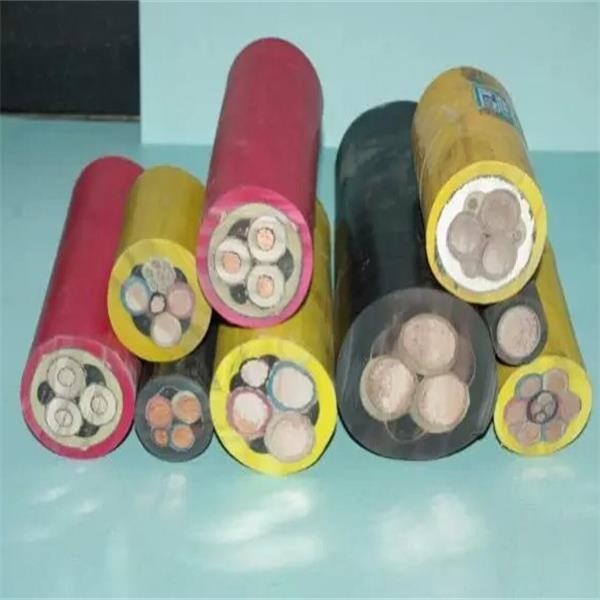
 New energy cable

Website: //sxhengnuo.cn/news/599.html

Related labels: New energy cable specification , New energy cable model , Quotation of new energy cable

Recent browsing:

contact us

Shandong Peninsula Cable Co., Ltd

Tel.: 0535-8621134

Q        Q:1653178622

Email: [email protected]

Address: Tonghai Road, High tech Development Zone, Longkou, Shandong

 New energy cable 1522035370290487.png