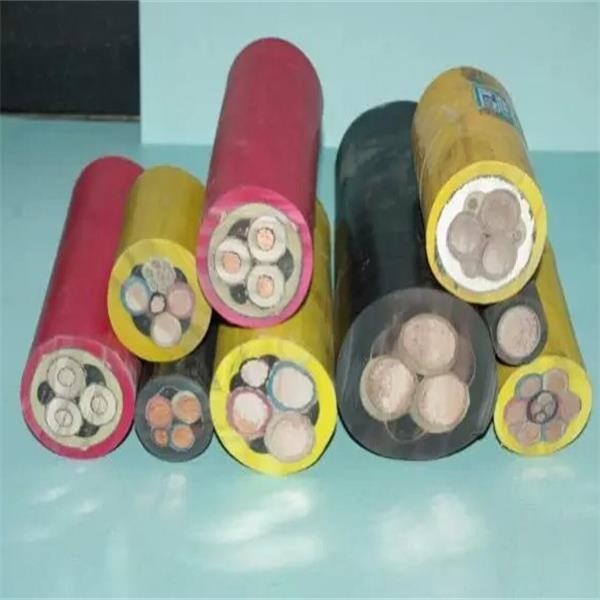
New energy cables are specially designed for new energy industries (such as photovoltaic, wind power, energy storage, electric vehicles, etc.), which need to meet the requirements of high voltage, high current, extreme environment resistance (high and low temperature, ultraviolet, oil pollution, etc.) and long life. Its core applications include:
PV system : Cable for component connection, inverter to combiner box/transformer;
Wind power generation : Power transmission cables inside the tower, from the engine room to the converter;
electric vehicle : Battery pack connection, charging cable from charging post to vehicle;
Energy storage power station : Power transmission and control system cable between battery clusters.
Insulation and sheath materials
Weather resistance: through 1000 hour ultraviolet aging test, the retention rate of elongation at break is ≥ 80%;
Withstand voltage: PV cable It shall withstand DC 1500V withstand voltage test (AC 1000V for conventional cables).
Photovoltaic cables usually use cross-linked polyethylene (XLPE) or irradiated cross-linked polyolefins (such as TPE, TPU), with a temperature resistance rating of 120 ℃~150 ℃, and need to pass UL4703, T ∨ V Rhine certification;
Electric vehicle cables are made of LSZH flame retardant materials, which are both oil resistant (such as gearbox lubricating oil) and ozone resistant (electrical discharge environment in the cabin).
Material requirements :
Typical performance :
Structural design
conductor : High purity oxygen free copper (≥ 99.99%) or tinned copper, multi strand stranded structure (such as Class 5 flexible conductor) is used to improve bending flexibility (bending radius ≤ 6D, D is the outer diameter of the cable);
Shielding layer : Electric vehicle cables need double-layer shielding (aluminum foil+braided copper mesh), shielding efficiency ≥ 90dB (10MHz~1GHz), to reduce electromagnetic interference (EMI);
Armor layer : Wind power tower cable shall be armored with steel wire, with tensile strength ≥ 500N/mm ², to prevent self weight tensile fracture during vertical laying.
Safety and environmental protection standards
Flame retardant grade : The energy storage cable shall meet IEC 60332-3 bunched combustion Class B, and the smoke toxicity shall reach the safety level of GB/T 20285-2006;
Environmental requirements : Lead, cadmium and other heavy metals are prohibited, RoHS 2.0 and REACH regulations are met, and recyclable materials account for ≥ 80% in some scenarios.
| Application scenarios | Cable type | Core parameters | Key points of model selection |
|---|
| PV system | PV DC cable (such as PV1-F) | Rated voltage: DC 1500V, temperature resistance: - 40 ℃~+90 ℃, weather resistance level: ≥ 25 years (equivalent to 2000 thermal cycles). | Pay attention to the UV aging resistance certification (such as T ∨ V Rhine), and consider the voltage drop (≤ 5%) for long-distance laying. |
| Wind power generation | Wind power tower cable (such as DIN VDE 0210) | Temperature resistance - 40 ℃~+125 ℃, bending fatigue life ≥ 100000 times (bending radius 8D, 180 ° reciprocating), waterproof grade IP68. | The tensile strength of armor shall be calculated for vertical laying, and the cable in the engine room shall be resistant to salt spray (500 hour spray test). |
| electric vehicle | High voltage cable (GB/T 18487.1) | Rated voltage AC 600V~1500V/DC 1000V, temperature resistance - 40 ℃~+125 ℃, shielding attenuation ≥ 60dB (100MHz). | The charging interface standard (such as GB/T 20234) shall be matched, and the current carrying capacity (such as 1000V/500A) of fast charging cable shall be considered. |
| Energy storage power station | Energy storage power cable (IEC 61412) | Temperature resistance - 25 ℃~+90 ℃, short circuit withstand current ≥ 30kA (1s), flame retardant grade UL94 V-0. | In case of multiple parallel laying, the current carrying shall be balanced, and the cables in the battery compartment shall be protected from electrolyte corrosion. |
Extreme temperature resistance
problem : The surface temperature of photovoltaic cables in desert areas can reach 80 ℃ in summer and - 30 ℃ in winter, and ordinary PVC materials are easy to harden and crack.
programme : Silane cross-linked PE insulation is adopted, and it passes the low temperature impact test at - 40 ℃ (1kg hammer, no crack at 1m height).
High reliability connection
problem : Frequent plugging and unplugging of the electric vehicle charging interface may lead to terminal oxidation and increase of contact resistance.
programme : The conductor is made of silver plated copper alloy, and ultrasonic welding is carried out after the terminal is crimped. The contact resistance is ≤ 50 μΩ, and it has passed 1000 times of plug and pull life test.
Light weight and bending resistance
problem : The cable of wind power tower drum is easy to sag due to excessive dead weight, and the insulation layer cracks due to frequent bending.
programme : Aluminum magnesium alloy armouring (40% lighter than steel armouring) is used, and elastomer toughening agent is added to the insulation layer, with the breaking elongation ≥ 300%.
Material innovation
Graphene modified PE insulation material: the thermal conductivity is increased by 50% to reduce the temperature rise during high current laying (for example, the temperature rise of 1000A cable is ≤ 40K);
Degradable cable: the bio based polylactic acid (PLA) sheath material has entered the pilot application, and the degradation rate is ≥ 90% within 180 days after abandonment.
Intelligent upgrade
Built in sensor cable: integrated temperature and partial discharge monitoring chips, real-time transmission of operational data through RFID (such as the application case of the North Hebei Energy Storage Project of the State Grid);
Dynamic current carrying calculation: automatically adjust the maximum allowable current according to the cable temperature and ambient humidity, and improve the transmission efficiency by 15%~20%.
Standardization progress
China is developing the Test Method for Shielding Performance of High Voltage Cables for New Energy Vehicles, which is expected to be implemented in 2025, expanding the testing frequency of shielding efficiency to more than 1GHz;
The EU has launched the EN 63325 series standards, and the weather resistance requirements for photovoltaic cables have been extended from 25 years to 30 years.
Parameter Checklist
Whether the rated voltage and current match the system demand (for example, DC 1500V cable is required for photovoltaic inverter DC 1000V);
Ambient temperature range (such as - 50 ℃ low temperature resistant type in cold regions), laying method (direct burial/overhead/pipe threading).
Certification and test report
The manufacturer is required to provide a third-party test report (such as T ∨ V, CQC), focusing on aging test, flame retardant grade, shielding effectiveness data;
The electric vehicle cable shall pass the withstand voltage breakdown test (≥ 3000V) in GB/T 18384-2021 Safety Requirements for Electric Vehicles.
Cost and life balance
It is recommended to choose PV cable products with high unit price but a service life of 25 years (for example, the cost per meter is 30% higher than that of ordinary cables, but the full cycle cost is 40% lower);
The energy storage cable can adopt the "prefabricated branch cable" scheme to reduce the field joints and reduce the failure probability.
If cable type selection calculation (such as current carrying capacity, voltage drop, bending radius design) for specific projects is required, system parameters (voltage level, ambient temperature, laying length, etc.) can be provided for in-depth design.
New energy cable specification, new energy cable model, new energy cable quotation